
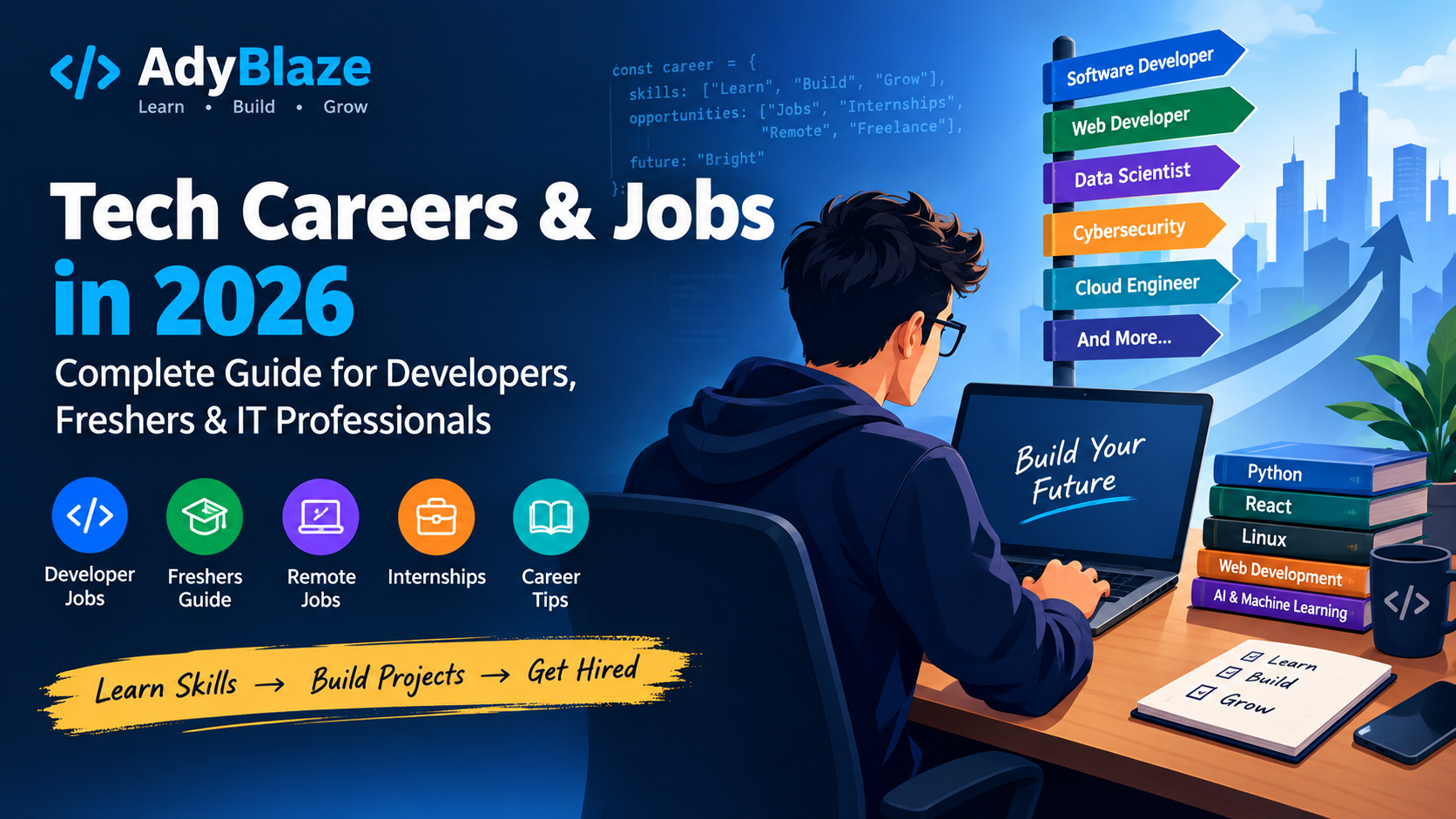
The technology industry continues to create new career opportunities in 2026. From software development and artificial intelligence to cybersecurity, cloud computing, data science, and technical support, there are many career paths available for students, freshers, and experienced IT professionals.
If you are looking for IT jobs, developer jobs, internships, remote jobs, work-from-home opportunities, or career guidance, choosing the right skill and understanding what companies expect can make your job search much easier.
In this guide, we will explore the most popular technology careers in 2026, skills you should learn, opportunities for freshers, remote jobs, internships, interview preparation, and practical ways to build a successful career in technology.
What Is a Technology Career?
A technology career is a professional career related to software, computers, websites, applications, networks, databases, artificial intelligence, cybersecurity, cloud infrastructure, or other digital technologies.
Some popular technology careers include:
- Software Developer
- Web Developer
- Front-End Developer
- Back-End Developer
- Full-Stack Developer
- Python Developer
- Java Developer
- React Developer
- Node.js Developer
- AI Engineer
- Machine Learning Engineer
- Data Analyst
- Data Scientist
- Cybersecurity Analyst
- Cloud Engineer
- DevOps Engineer
- Database Administrator
- Linux Administrator
- Technical Support Engineer
The right career depends on your interests, current skills, experience, and long-term goals.
Best Tech Careers in 2026
1. Software Developer
Software development remains one of the most popular technology career options.
Software developers design, build, test, and maintain applications and software systems.
Common skills include:
- Programming languages
- Data structures and algorithms
- Git and GitHub
- Databases
- APIs
- Software development practices
- Problem solving
Popular programming languages include Python, Java, JavaScript, C++, PHP, and C#.
2. Web Developer
Web development is another excellent career option for beginners.
Web developers create websites and web applications.
A typical web development learning path includes:
HTML → CSS → JavaScript → Front-End Framework → Back-End → Database → Git
Popular technologies include:
- HTML
- CSS
- JavaScript
- React
- Node.js
- PHP
- MySQL
- MongoDB
If you are a beginner, starting with HTML, CSS, and JavaScript can provide a strong foundation.
3. Python Developer
Python is widely used in web development, automation, data analysis, artificial intelligence, and scripting.
A Python developer may work on:
- Web applications
- Automation
- APIs
- Data processing
- Backend systems
- AI applications
- Developer tools
For beginners, Python is also relatively easy to start learning because of its simple syntax.
A useful learning path is:
Python Basics → OOP → Git → APIs → Database → Web Framework → Projects
4. React Developer
React is widely used for building modern user interfaces and web applications.
A React developer should understand:
- HTML
- CSS
- JavaScript
- ES6+
- React components
- Props and state
- Hooks
- API integration
- Routing
- Git
You should also build real projects instead of learning React only through tutorials.
Examples of portfolio projects include:
- Admin dashboard
- E-commerce website
- Social network
- Blog platform
- Job portal
- Task management application
5. AI and Machine Learning Careers
Artificial intelligence is creating new opportunities across the technology industry.
Some AI-related career paths include:
- AI Engineer
- Machine Learning Engineer
- AI Developer
- Data Scientist
- Generative AI Developer
- AI Automation Specialist
Useful skills include:
- Python
- Mathematics and statistics
- Machine learning concepts
- APIs
- Data processing
- AI frameworks
- Generative AI tools
You do not necessarily need to start with advanced mathematics. Beginners can first learn Python, data handling, and basic AI concepts before moving into advanced machine learning.
Best Tech Jobs for Freshers
Freshers often face one major problem:
How can I get a job when every job seems to require experience?
The solution is to demonstrate practical skills.
Some entry-level roles include:
- Junior Software Developer
- Junior Web Developer
- Front-End Developer
- PHP Developer
- Python Developer
- Technical Support Engineer
- QA Tester
- Junior Data Analyst
- IT Support Executive
- System Administrator
- Intern
Instead of focusing only on certificates, build projects that demonstrate what you can actually do.
Build a Strong Portfolio
For example, if you want to become a web developer, create:
- Personal portfolio
- Responsive business website
- Blog application
- Authentication system
- REST API project
- Full-stack application
Put your best projects in your portfolio and clearly explain what technologies you used.
Remote Tech Jobs in 2026
Remote work has created additional opportunities for developers and IT professionals.
Remote positions can include:
- Software Developer
- Web Developer
- UI Developer
- Backend Developer
- Full-Stack Developer
- Technical Writer
- QA Engineer
- Customer Technical Support
- DevOps Engineer
- Data Analyst
However, remote jobs are often highly competitive.
To improve your chances, focus on:
- Strong communication
- Good technical skills
- Portfolio projects
- Professional resume
- LinkedIn profile
- Git repositories
- Interview preparation
Technology Internships
Internships can be particularly useful for students and freshers.
A good internship can help you understand:
- How development teams work
- Version control
- Code reviews
- Project management
- Real-world development
- Testing
- Documentation
- Professional communication
Before applying, make sure your resume clearly lists your technical skills and projects.
Do not wait until graduation to start building experience.
Skills You Should Learn for a Tech Career
You don’t need to learn every programming language.
Instead, choose one career path and build depth.
For Web Development
Learn:
HTML → CSS → JavaScript → React/other framework → Backend → Database → Git
For Python Development
Learn:
Python → OOP → APIs → Database → Git → Backend Framework → Projects
For AI
Learn:
Python → Data → Machine Learning Basics → AI APIs → Projects → Advanced AI
For Linux/System Administration
Learn:
Linux Basics → Terminal → Networking → Bash → Services → Security → Cloud
For Full-Stack Development
Learn:
Frontend → Backend → Database → APIs → Authentication → Deployment → Git
How to Find IT Jobs
When searching for technology jobs, don’t apply randomly to hundreds of positions.
First decide what role you want.
For example:
Junior Python Developer
Then search specifically for that role.
Use keywords such as:
- Python Developer Jobs
- Junior Python Developer
- Fresher Python Jobs
- Remote Python Jobs
- React Developer Jobs
- Front-End Developer Jobs
- PHP Developer Jobs
- Software Developer Jobs
- IT Internships
- Developer Internships
You should also regularly check company career pages and established job platforms.
How to Prepare for a Developer Interview
Technical interviews can cover several areas.
Depending on the role, you may be asked about:
Programming
- Variables
- Functions
- Loops
- OOP
- Error handling
- Data structures
Databases
- SQL
- Joins
- Indexes
- Primary keys
- Relationships
Web Development
- HTTP
- REST APIs
- Authentication
- JavaScript
- Front-end frameworks
Git
You should understand common commands such as:
git init
git clone
git add
git commit
git push
git pull
git branch
git merge
Projects
Interviewers may also ask:
Tell me about your project.
Therefore, don’t just copy projects from tutorials. Understand the code and be able to explain your decisions.
Resume Tips for Freshers
A fresher resume should be simple and focused.
Include:
- Name
- Contact information
- Professional summary
- Technical skills
- Projects
- Education
- Certifications, if relevant
- Portfolio
- GitHub/other relevant profiles
Avoid adding unnecessary personal information.
Most importantly, don’t list technologies you cannot actually use.
If you claim that you know React, be prepared to answer basic React questions.
Certifications vs Projects: Which Is More Important?
Certifications can demonstrate that you completed a course, but projects demonstrate practical ability.
For a developer role, a strong combination is:
Skills + Projects + Portfolio + Interview Preparation
For example, instead of having ten certificates with no practical work, you could have two relevant certifications and several well-built projects.
How to Build Experience Without a Job
You can start gaining practical experience before getting your first full-time position.
Try:
- Open-source projects
- Freelance projects
- Personal projects
- Internships
- Volunteer development work
- Building websites for small businesses
- Contributing documentation
- Creating developer tools
The goal is to demonstrate that you can solve real problems.
Common Mistakes When Looking for Tech Jobs
Applying Without Matching the Job
Don’t apply for every position just because it contains the word “developer.”
Read the requirements and compare them with your skills.
Learning Too Many Technologies
Trying to learn Python, Java, React, Angular, Node.js, PHP, Java, Docker, Kubernetes, AWS, and AI simultaneously can slow you down.
Choose a primary path first.
No Projects
Tutorials are useful for learning, but projects demonstrate practical ability.
Ignoring Git
Version control is an important part of modern software development.
Poor Resume
A resume that lists dozens of skills without demonstrating them can hurt your chances.
Career Roadmap for Beginners
If you’re completely new to technology, follow a simple process.
Step 1: Choose a Career
Pick one:
- Web Development
- Python Development
- Java Development
- AI
- Cybersecurity
- Cloud
- IT Support
Step 2: Learn the Fundamentals
Don’t skip the basics.
Step 3: Build Projects
Start with small projects and gradually increase complexity.
Step 4: Create a Portfolio
Show your best work.
Step 5: Prepare Your Resume
Keep it relevant to the role.
Step 6: Apply for Internships and Jobs
Apply consistently rather than randomly.
Step 7: Prepare for Interviews
Practice technical and behavioral questions.
Step 8: Continue Learning
Technology changes quickly, so continuous learning is part of a technology career.
Frequently Asked Questions
Which technology is best for getting a job in 2026?
There is no single technology that guarantees a job. Web development, software development, Python, cloud, cybersecurity, data, and AI all offer different career opportunities.
Choose a field based on your interests and build strong practical skills.
Can I get a developer job without a computer science degree?
Yes, some technology roles can be entered without a traditional computer science degree. However, requirements vary by company and position.
Strong practical skills, projects, problem-solving ability, and interview preparation can help.
Which programming language should beginners learn?
Python, JavaScript, Java, and other languages can be good choices depending on your career goal.
For example, JavaScript is useful for web development, while Python is widely used in backend development, automation, data, and AI.
How can freshers get their first IT job?
Build relevant skills, create projects, prepare a focused resume, apply for internships and entry-level roles, and practice interviews.
Are remote jobs available for freshers?
Remote entry-level opportunities exist, but they can be competitive. Building a strong portfolio can improve your chances.
Final Thoughts
A successful technology career is not built by simply collecting certificates or learning dozens of programming languages.
The better approach is:
Choose a career → Learn the fundamentals → Build projects → Create a portfolio → Prepare for interviews → Apply consistently → Keep improving.
At AdyBlaze, we will continue covering programming tutorials, AI tools, Linux guides, developer resources, career opportunities, internships, and technology career guidance to help beginners and developers build practical skills.
If you’re starting your technology career in 2026, focus on skills, projects, consistency, and real-world problem solving rather than trying to learn everything at once.